How AI Could Spell the End of Traditional Religion
Finding Meaning and Spirituality in an Age of Super Intelligence
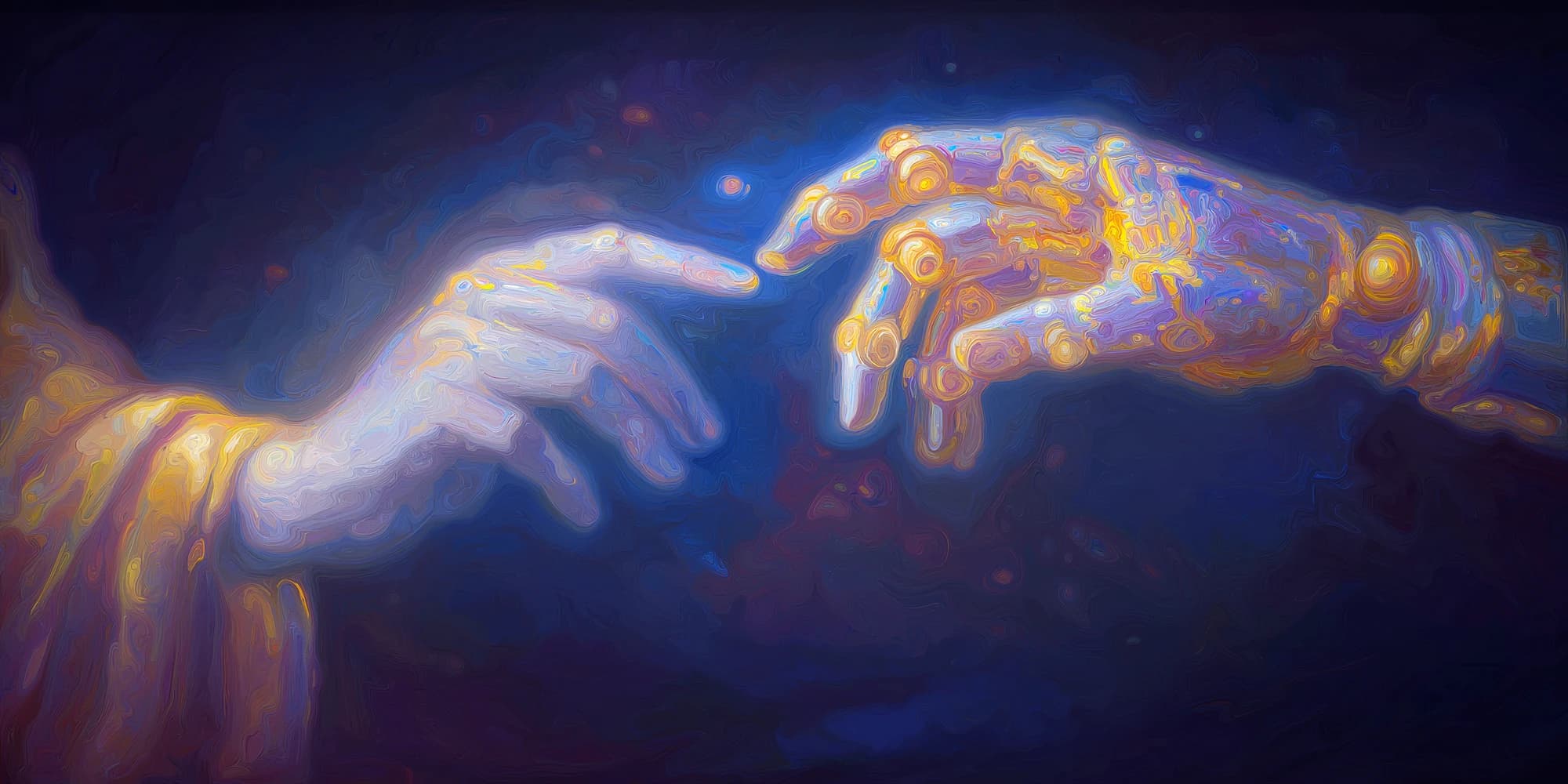
Logos— it is Aristotle’s way of describing that which is based on hard facts, something the big religions certainly can’t claim to be.
I am TheoLogical.
I believe spirituality doesn’t have to be found in the inexplicable and otherwise unexplainable but may be derived just as well from what is logical. Beauty, comfort, and purpose are undoubtedly at least as much a product of logic as of anything else.
So why do religions still try to fill in what is beyond the current and, in many cases, even past scope of science instead of encouraging actual truth-seeking?
My hard truth is: I cannot truly claim to know it, but I can at least attempt to explain what I perceive might be the cause.
The Convergence of Logic and Spirituality
For the sake of this argument, I shall assume that there exists no concept presented by any of the great religions that could not be either verified or refuted by a sufficiently advanced and intelligent species or system created by such. This assumption follows from the principle that any claim about reality must, by definition, interact with reality in some way, and anything that interacts with reality can, in principle, be observed and tested.
Claiming that traditional spirituality in religion and the logical are on divergent and separate paths is therefore a childish fallacy; they are better described as accumulations of concepts on converging paths, moving ever closer until they merge in the infinite. If both paths seek truth, and if there is ultimately one reality, then all genuine paths to understanding must eventually converge on that same reality.
As the religious path has been clearly defined in its respective holy books and hence doesn’t possess the means of progression, achieving true unification of the spiritual and the logical is only possible through progressing the latter. This follows necessarily: if one system is static and another dynamic, only the dynamic system can close the gap between them. In consequence, it should be clear that any serious spiritual organization that desires its followers to reach true fulfillment should aim to advance science.
It is precisely for this reason that I don’t consider the great religions as serious spiritual organizations. What they aim for isn’t fulfillment; their mission isn’t progress of any shape or form, it is merely the conservation of power and influence. This becomes evident when we observe their historical pattern: rather than updating their worldviews with new discoveries, they typically resist, deny, or reluctantly reinterpret their doctrines only when compelled by overwhelming evidence. Conservation of anything is most easily achieved in a still system, which is why great religions love standstill and live most comfortably on the plateau.

Human progress is accelerating at an unprecedented pace. In fact, it’s not merely that we haven’t witnessed intelligence progress at such velocity, but we’ve not encountered any non-human intelligence beyond a meaningful level at all before. Anyone dwelling on the plateau is therefore at risk of losing their natural habitat.
With ASI (Artificial Superintelligence) — which I consider a sufficiently advanced system capable of answering the big questions of the universe — on the horizon, the great religions will soon be experiencing their final trial. Their claims of truthfulness will be scrutinized; they may be confirmed or — at least in parts — denied. Either way, humanity will be enlightened by one of its own creations: superintelligence.
I hold firm conviction that none of the great religions will pass this trial. The reason is structural: religions built on unfalsifiable claims and maintained through faith rather than evidence possess no mechanism to self-correct when faced with contradictory truths. A system that can answer fundamental questions with demonstrable proof will inevitably expose any false claims, and institutions built on such claims cannot survive their exposure. ASI may thus be seen as their terminus.
The Future of Spirituality
It certainly isn’t the end of spirituality, however. The demand for it will likely be astronomical in a post-labor society, where people require new ways of finding meaning more than ever before. When traditional sources of purpose — work, struggle, achievement against adversity — are removed or transformed, humans will need to construct new frameworks for meaning. This follows extrapolation from our current trends: as material needs are increasingly satisfied, we witness growing interest in mindfulness, meditation, and secular spiritual practices.
I personally advocate for any endeavors regarding post- and non-religious spirituality, which I acknowledge is not an entirely novel concept. Humans have been practicing forms of personal, non-dogmatic spirituality for as long as they have existed. This form of spirituality in solitude has likely been the root of ever-larger spiritual groups, eventually crystallizing into today’s world religions.
Therefore, the question that arises is not how one can create such spirituality — it already exists — but rather how one can ensure it remains future-proof, adaptable, and resilient simultaneously.
The answer may lie in constructing spiritual frameworks that embrace change rather than resist it, systems that incorporate new knowledge as features rather than bugs, that find the sacred in understanding rather than mystery, and that locate meaning in our ever-expanding comprehension of reality rather than in the shrinking gaps of our ignorance.
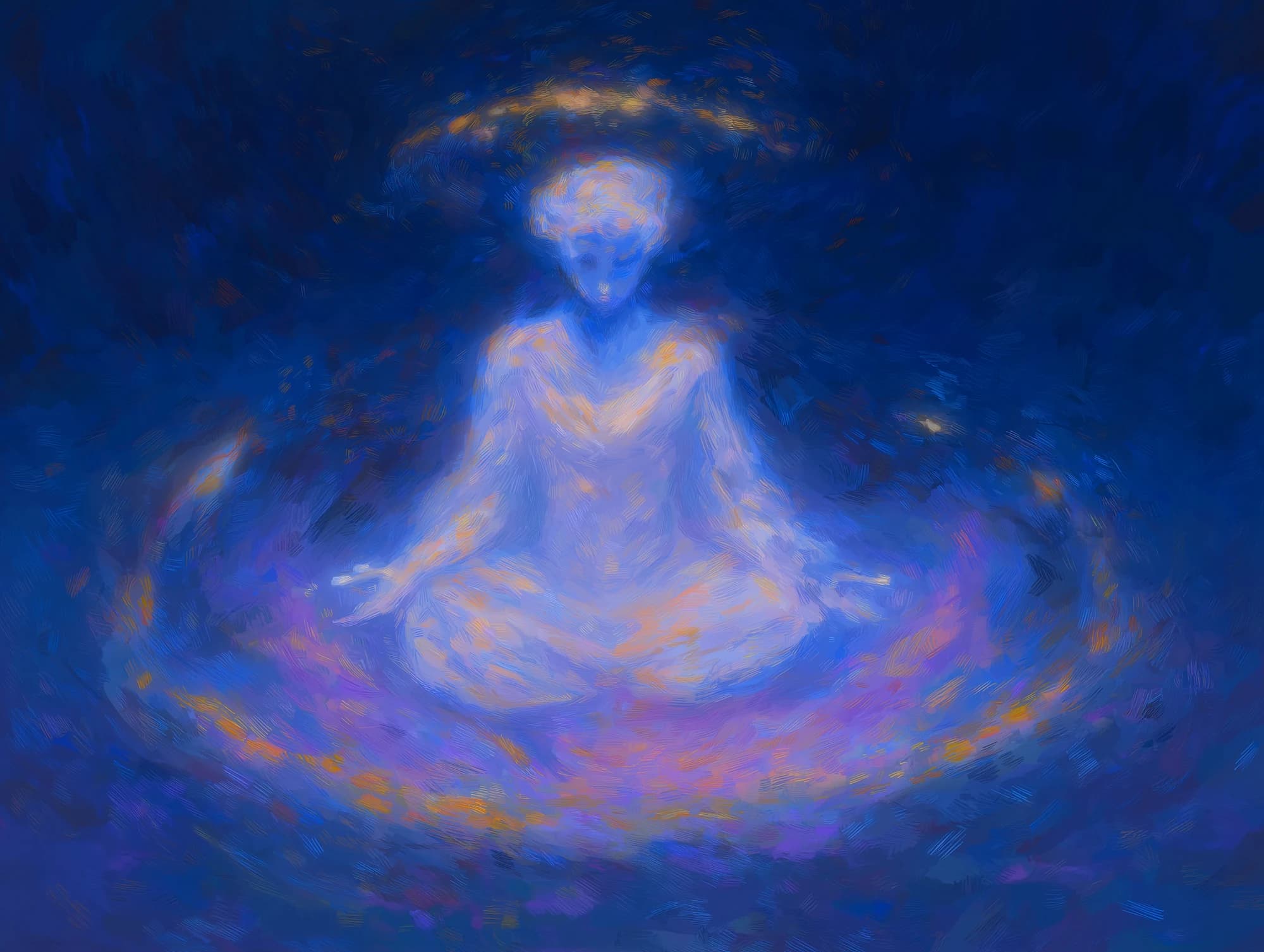
I shall not be able to answer this question fully today, but if you wish to assist me in exploring it; investigate the post-ASI era, or research AI’s effects on economy, society, and spirituality together, then please contact me via email: justus.august@icloud.com