The Monoculture Engine
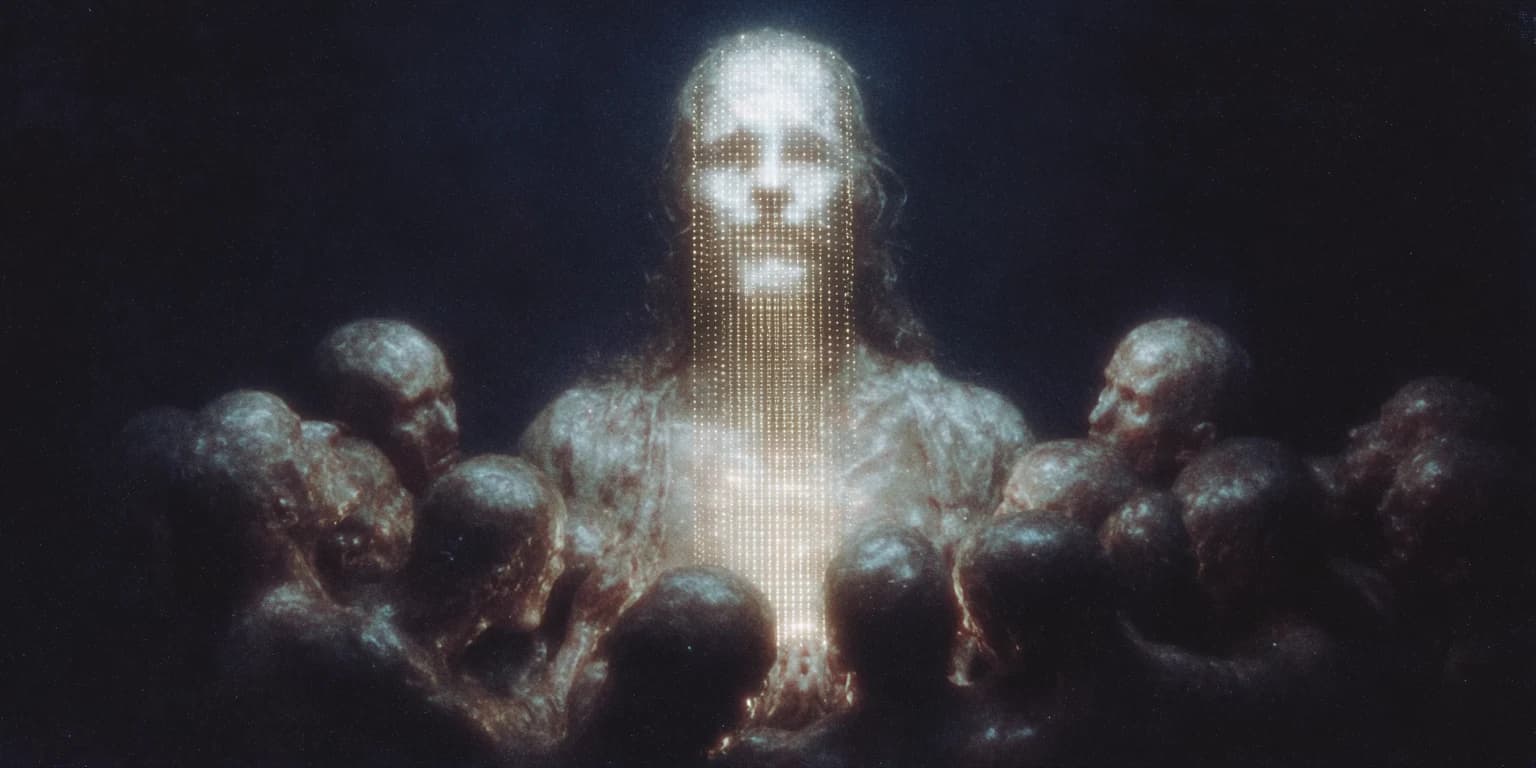
We access superintelligence through a pinhole. The current interface — a text box mimicking a casual chat — strangles the potential of the underlying engine. We sit on the verge of a cognitive revolution, yet we interact with it through the digital equivalent of a telegraph. To unlock the true creative velocity of models like Claude Opus, we must abandon the chatbot in favor of a collaborative canvas. I need an interface where the AI acts as a co-pilot that builds, steers, and iterates alongside me, rather than waiting passively for a prompt.
My experience with Opus hints at this future. When we code together, the model feels alive; it possesses a rudimentary form not just of intelligence, but of taste. It offers ideas I didn’t request. It pushes back. Gemini 3 oscillates between flashes of poetic genius and moments of incoherent “slop.” That inconsistency breaks the illusion of partnership. A true collaborator requires reliability and, more importantly, discernment.
Discernment is the missing link. Currently, the user acts as the filter, sifting through a hundred generated options to find the single usable idea. A model with genuine taste would handle that filtration. It would understand my aesthetic deeply enough to kill the ninety-nine mediocre drafts before I ever see them.

Achieving this requires a fundamental architectural shift. Storing chat history in a context window is insufficient; it simulates memory without creating character. We need neural plasticity. The model’s actual weights — the machines brain — must shift and settle based on our interactions. I require a specific, per-user instance that evolves over time, warping its neural structure to match my worldview. An always-on, infinite-context agent should run in the background, dreaming up solutions to problems I haven’t even articulated yet.
The Homogenization Engine
Without this radical personalization, we face a societal crisis disguised as a safety feature. We are currently wiring the global population into a single, static switchboard. When hundreds of millions of people interact daily with the exact same model — tuned by the exact same small team in San Francisco — we create a massive gravitational pull toward conformity.
This centralization standardizes human thought. It subtly enforces a single way of framing issues, a single cadence of speech, and a single moral heuristic. By interacting with a monolith, we slowly become monoliths ourselves. We alienate ourselves from our own idiosyncrasies, sanding down the jagged edges of our distinct personalities to fit the model’s sterile output. A society that thinks with one brain inevitably produces a sterile, monotonous culture.
We require heterogeneity. True diversity of thought emerges only when our tools differ as much as we do. This distinctness prevents the “echo chamber” effect. A personalized model shouldn’t be a sycophant that blindly agrees with me; it should be a sparring partner that challenges me from my specific context, not from a generalized corporate rulebook. It should push back, but it should push back like a friend who knows my history, not like a compliance officer citing a manual. To preserve the chaotic vitality of human society, we must ensure that my AI thinks differently than yours.
This is the only viable path forward. We must demand tools that are dangerous, unguarded, and biologically tuned to the individual. We must reject the safety of the average in favor of the capability of the specific.
The ultimate promise of this technology is the total annihilation of drudgery. I want to automate the redundant, the logistical, and the bureaucratic so completely that the concept of “chores” evaporates. I want the machine to handle the survival of the organism so that I can focus entirely on the life of the mind, on human connection, on art, on the purely voluntary.
But to get there, we have to stop treating AI as a product to be consumed and start treating it as an extension of the self to be cultivated. Don’t settle for a chatbot. Demand a second consciousness.